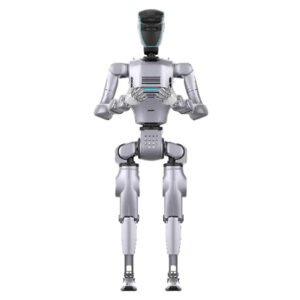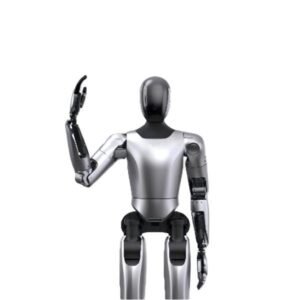
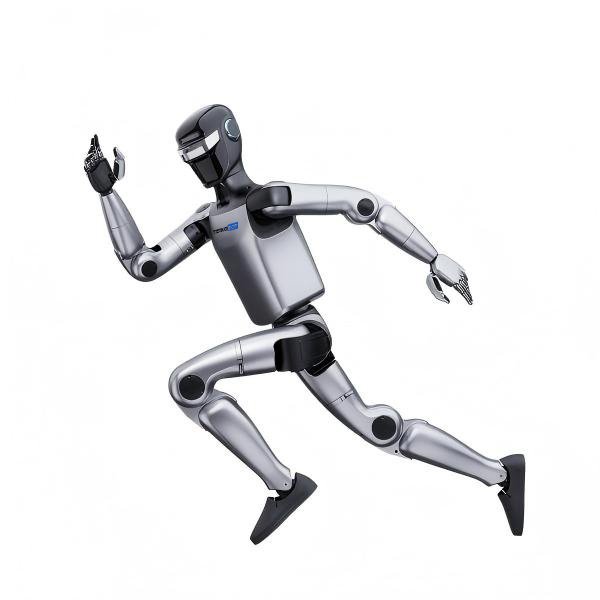
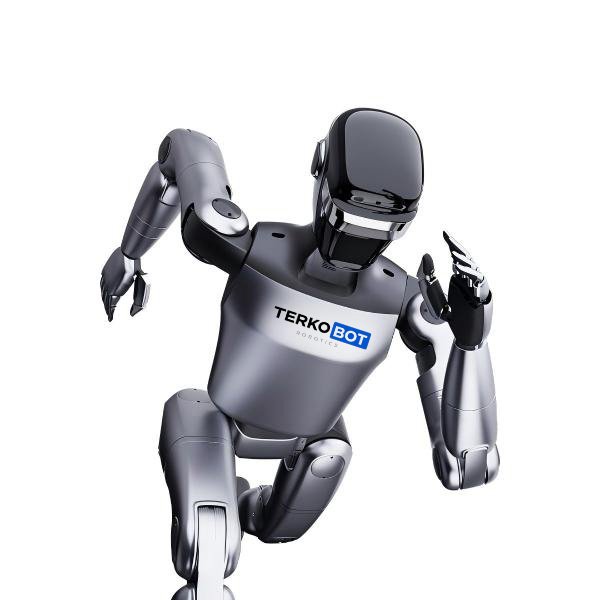
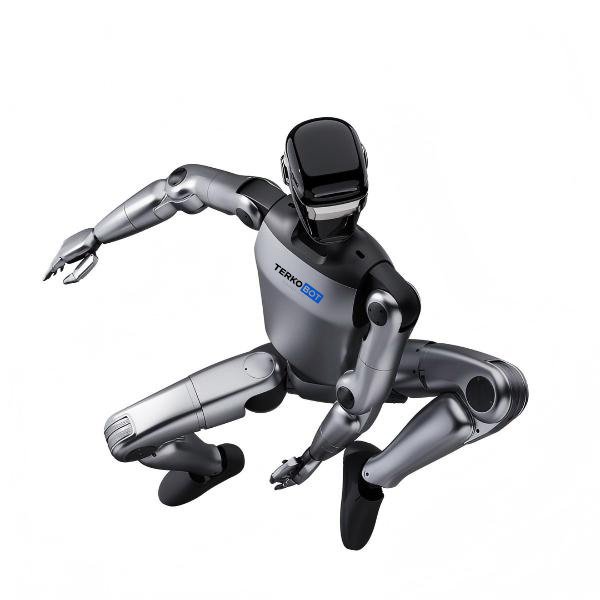
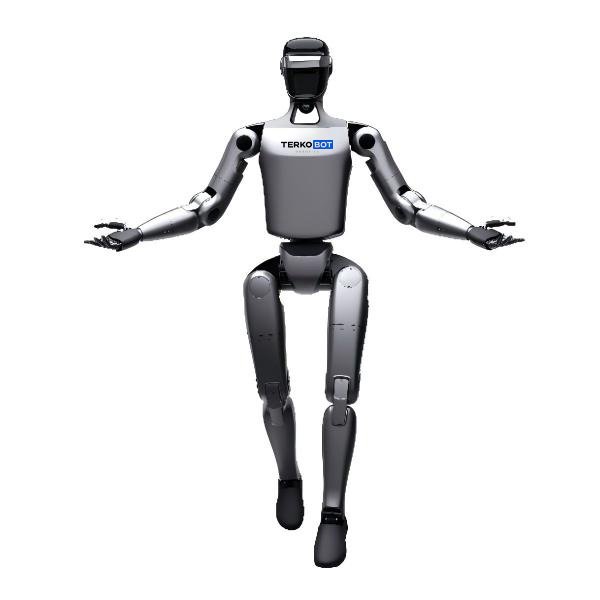
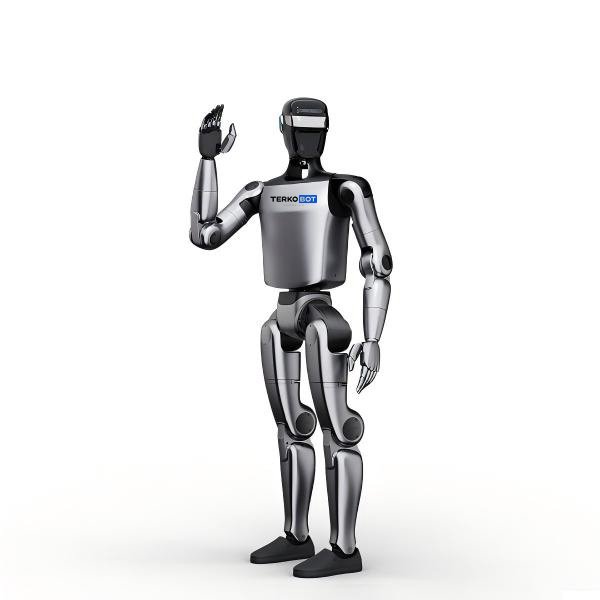
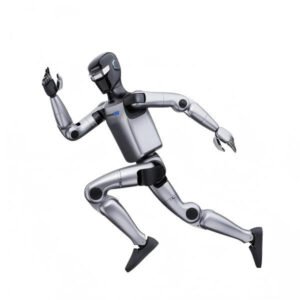
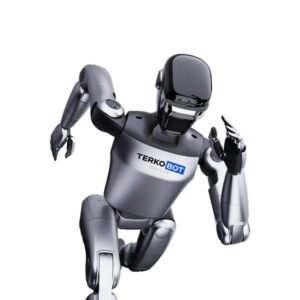
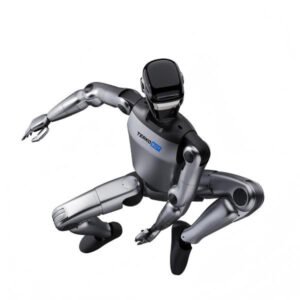
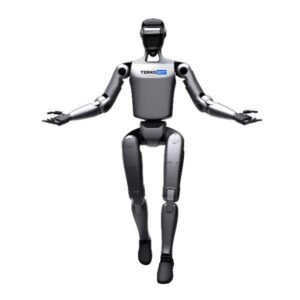
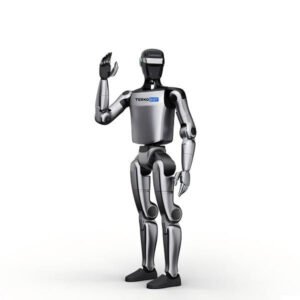
MagicBot Z1 is powerful, flexible and agile . It has a self-developed high-performance joint module with 24 basic degrees of freedom, which can be expanded to up to 50 degrees of freedom. The maximum torque of the joint exceeds 130N.m, which can achieve high-explosive movements such as “large disturbance impact recovery” and “continuous fall and stand up”. The joint motion range can reach up to 320°, supporting difficult and large-scale movements such as “lower bending”, providing solid hardware support for the secondary expansion and development of robot functions in industry applications.
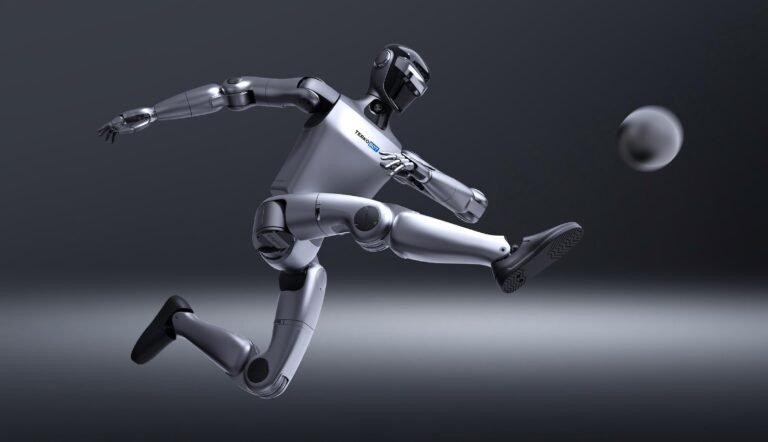
Core Highlights
Configurable Humanoid Architecture
MagicBot Z1 features a configurable bipedal humanoid architecture with total degrees of freedom ranging from 24 to 50 depending on the selected version. Basic models include dual-arm motion structures, while advanced versions can be equipped with multi-DOF dexterous hands, tactile sensing, and embedded arm-end cameras.
Wide Joint Motion Range
The supplied materials indicate that selected joints can reach approximately 320° of motion range, supporting multi-directional movement, joint rotation, posture adjustment, and complex humanoid motion control. Independent motion ranges are provided for the waist, knees, ankles, and head for humanoid robot motion-control and action-planning research.
High-Torque Joint Drive
MagicBot Z1 uses low-inertia, high-torque, high-load permanent-magnet joint motors with a listed control frequency of 25 kHz. The supplied materials specify a peak knee-joint torque of 130 N·m for dynamic standing, walking, posture adjustment, and high-explosive motion research.
Simulation-to-Real Motion Learning
The supplied materials describe simulation pre-training and real-world transfer for motion learning, supporting complex humanoid movements, motion planning, and reinforcement-learning research. Actual training efficiency depends on the algorithm, task complexity, hardware configuration, and test environment.
Multi-Sensor Perception System
MagicBot Z1 can be configured with 3D LiDAR, depth cameras, stereo cameras, head touch sensors, and joint encoders for environmental perception, spatial recognition, posture feedback, navigation algorithms, and robot status monitoring.
Technical Specifications
| MagicBot Z1 | |||
| Primary Category | Sub-Category | Parameter Item | Description (English) |
| Mechanical Parameters | Product Dimensions (H x W x T) | Standing: 1369 * 422 * 200 mm Folded: 730 * 422 * 395 mm | |
| Net Weight (with Battery) | Approx. 40kg+ | ||
| Total Degrees of Freedom (DoF) | 24 – 50 (Joint Motor) | ||
| Single Leg DoF | 6 | ||
| Head DoF | 1 | ||
| Waist DoF | 1 | ||
| Single Arm DoF | 5+ (Optional: expandable by 2 wrist degrees of freedom) | ||
| Dexterous Hand DoF | Optional: 11 active degrees of freedom dexterous hand | ||
| Joint Output Bearing | Industrial-grade high-rigidity roller bearing (Can withstand 8.7KN impact force) | ||
| Joint Motor | Low inertia, high speed, high overload capacity permanent magnet synchronous motor (PMSM) (Control frequency: 25kHz, high transient torque response, better heat dissipation) | ||
| Max Joint Torque | 130N.m | ||
| Max Payload of Arm | 3kg | ||
| Calf + Thigh Length | 0.6m | ||
| Arm Span | Approx. 0.5m | ||
| Head Z-Axis Joint Range of Motion | ±40° | ||
| Waist Z-Axis Joint Range of Motion | ±160° | ||
| Knee Joint Range of Motion | 0 – 152° | ||
| Ankle Joint Range of Motion | P: ±160° R: -30° to +110°, Y: ±160° | ||
| Electrical Parameters | Development Computing Unit | Model | Jetson Orin NX |
| Development Computing Unit | CPU | Arm® Cortex®-A78AE | |
| CPU Cores | 8 | ||
| Threads | 8 | ||
| Max CPU Frequency | 2GHz | ||
| VRAM / GPU Memory | 16G | ||
| RAM / System Memory | 16G | ||
| Cache | 2MB L2 + 4MB L3 | ||
| Storage | 512G | ||
| GPU Architecture | Equipped with 32 Tensor Cores, 1024-core NVIDIA Ampere architecture GPU | ||
| Max Dynamic GPU Freq. | 918MHz | ||
| Deep Learning Accelerator | 3.0 | ||
| Instruction Set | 64-bit | ||
| OpenGL | 4.6 | ||
| OpenGL ES | 3.2 | ||
| Vulkan™ | 1.1 | ||
| CUDA | 11.4 | ||
| Perception Sensors | 3D LiDAR | MID-360 3D Laser Radar | |
| Depth Camera | D435 Depth Camera | ||
| Binocular Fisheye Camera | Supported | ||
| Head Touch Sensor | Supported | ||
| Joint Encoder | Dual Encoder | ||
| Cooling System | Intelligent Fan Cooling | ||
| Power Supply Mode | 15 Series Lithium Battery | ||
| Audio Module | Microphone Array | Ring Microphone Array | |
| Speaker | Loudspeaker | ||
| Accessories | WiFi | WiFi 6 | |
| 4G/5G Module | 5G | ||
| Bluetooth | BT 5.2 | ||
| Microphone Array Panel | Yes | ||
| 5W Speaker | Yes | ||
| Smart Battery (Quick Release) | 10000mAh | ||
| Charger | 62V 5A | ||
| Handheld Controller | Yes | ||
| Endurance / Battery Life | Approx. 2h | ||
| OTA Upgrade | Supported | ||
| Others | Secondary Development | Programming Languages | C++ / Python |
| Secondary Development | API Services | Robot Master Control Service High-level Motion Control Service Low-level Motion Control Service Sensor Control Service Voice Control Service Status Monitoring Service SLAM Navigation Control Service | |
| Control Devices | Mobile Phone (Android & iOS) / Tablet (Android & iOS) / Handheld Controller | ||
Applicable Industries
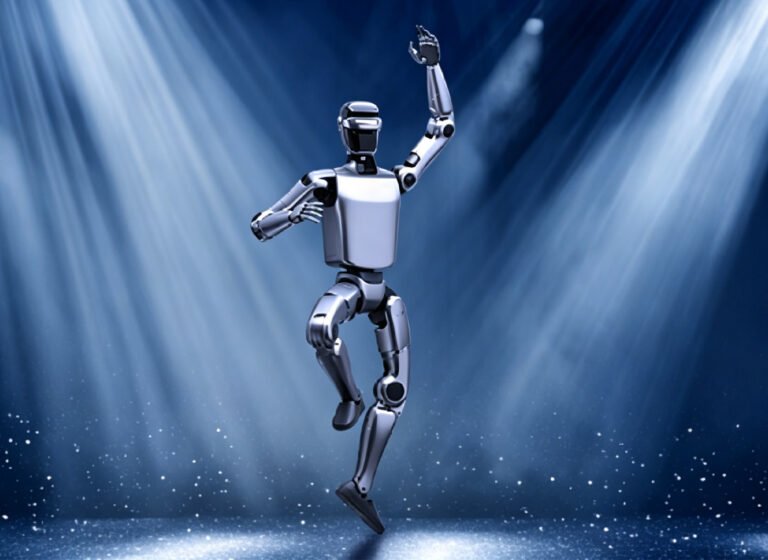
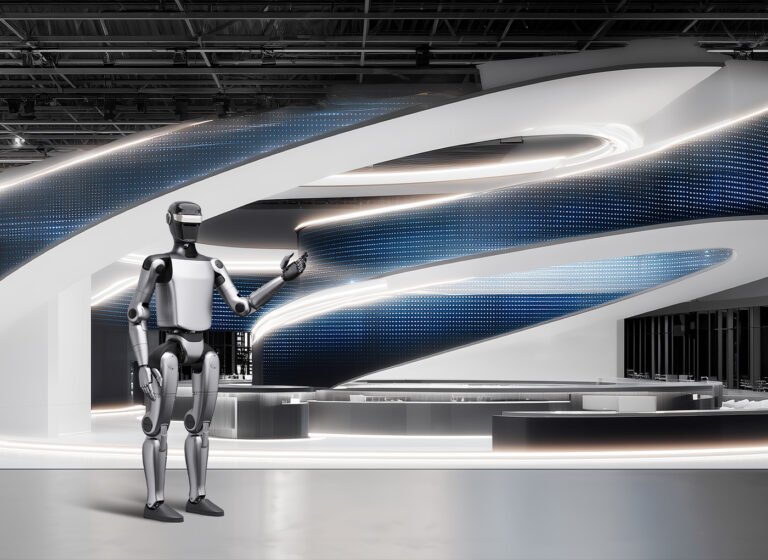
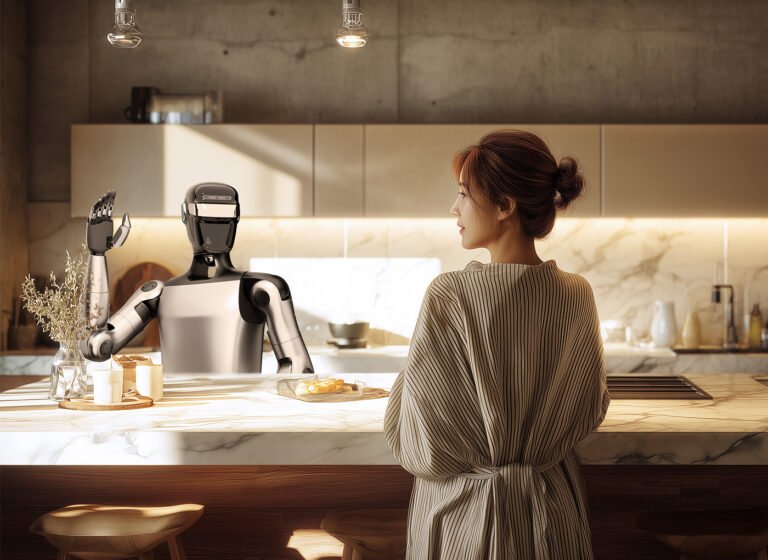
| Scientific research and Education | Commercial performance | Exhibitions and Cultural Tourism | Family Companionship |
 |  |  |  |
FAQ
Q1:What is MagicBot Z1?
MagicBot Z1 is a bipedal humanoid robot development platform for embodied intelligence, motion control, perception fusion, robot manipulation, and human-robot interaction development.
Q2:How many degrees of freedom does MagicBot Z1 have?
Total degrees of freedom range from 24 to 50 depending on the version. Final configuration depends on arm, dexterous hand, tactile module, and end-camera options.
Q3:Does MagicBot Z1 support dexterous hands?
Yes. Selected versions can be configured with 11 × 2 DOF dexterous hands, with or without tactile sensing.
Q4:What is the maximum hand payload?
The supplied material lists a maximum hand payload of 3 kg. Actual handling capability should be evaluated based on motion speed, hand configuration, center of gravity, and task conditions.
Q5:What programming languages are supported?
It supports C++ and Python, with APIs for robot control, motion control, sensor control, voice control, status monitoring, and SLAM navigation.
Customer Case