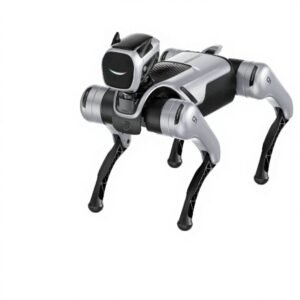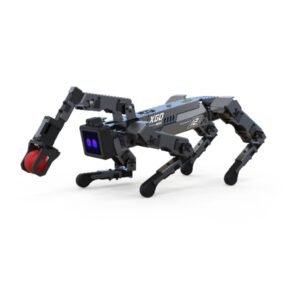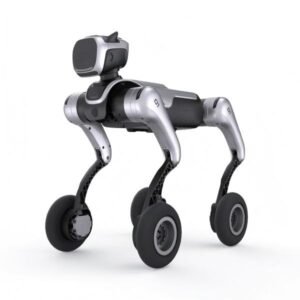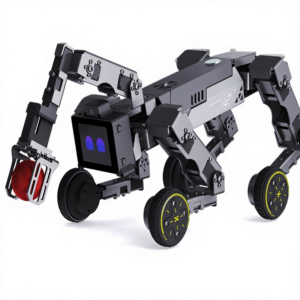
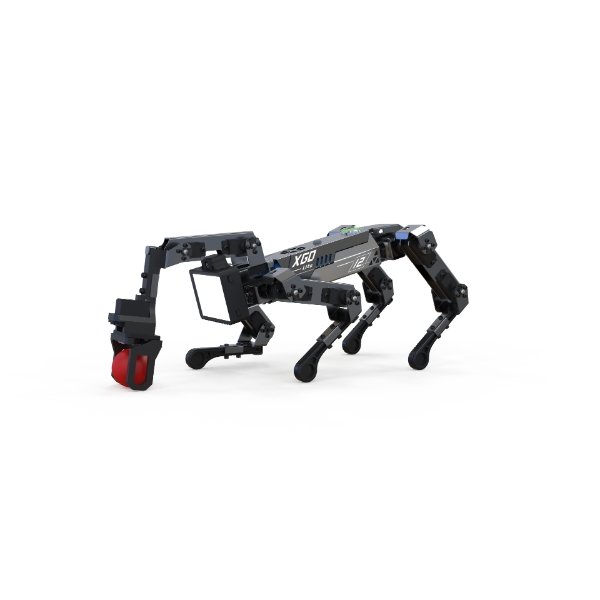
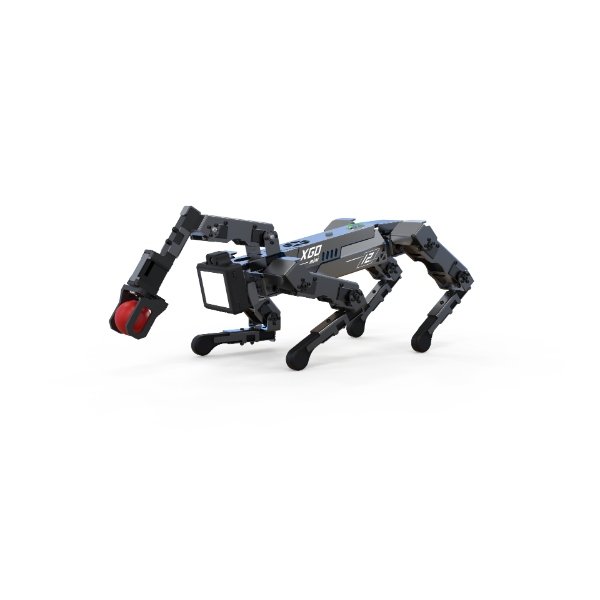
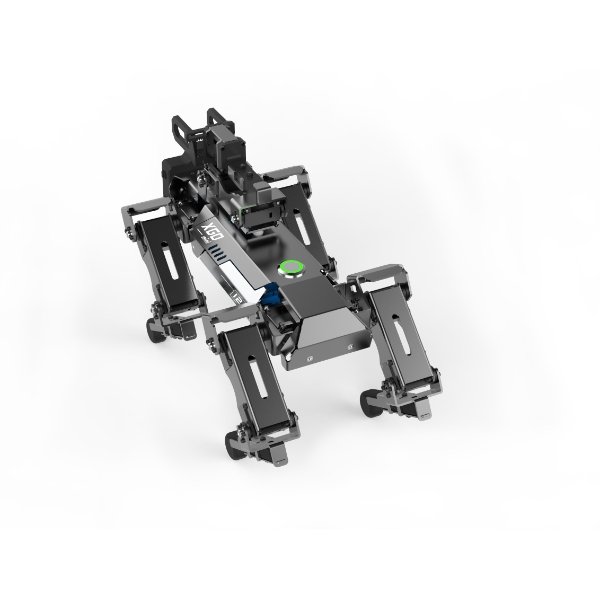
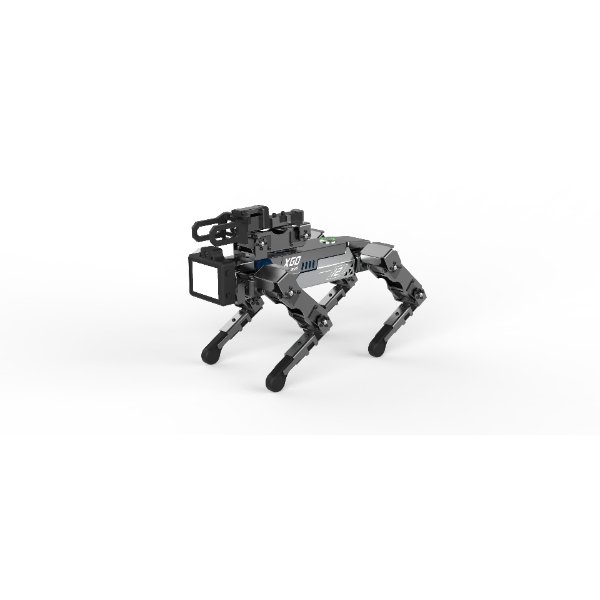
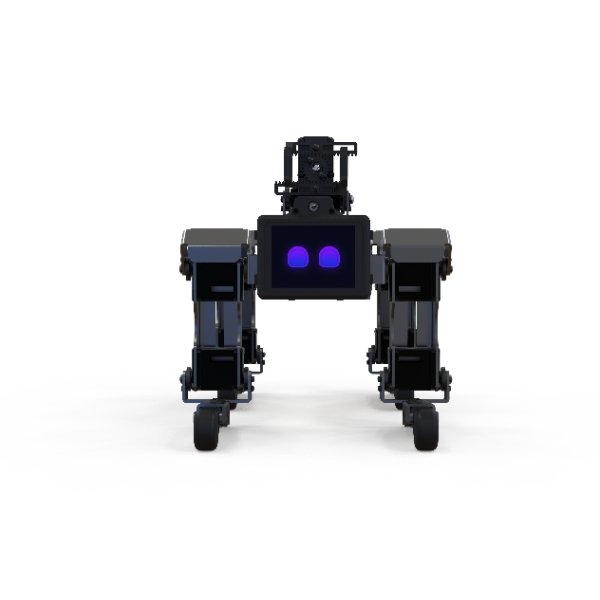
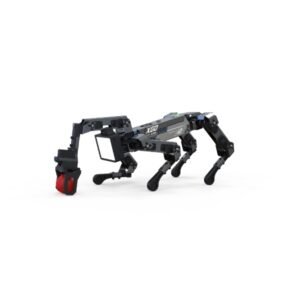
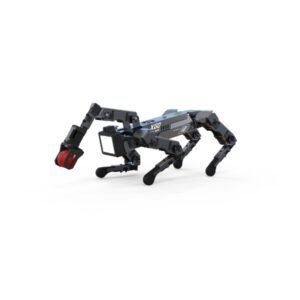
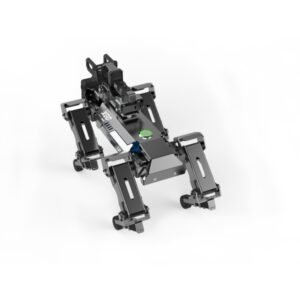
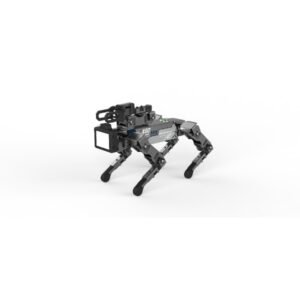
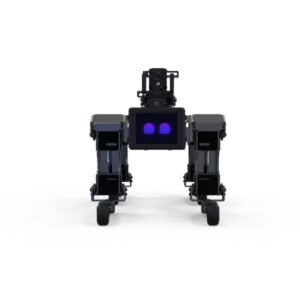
The Lite3 Quadruped Robot is an advanced desktop AI robot dog designed for AI edge computing applications. It features a 12-degree-of-freedom (DOF) structure with an integrated gripper, powered by a Raspberry CM5 module. This robot supports omnidirectional movement and 6D posture control, ensuring stability and versatility in motion.
It is equipped with a 6-axis IMU, joint position sensors, and current sensors, which provide essential feedback for position, joint rotation, and torque, facilitating internal algorithms and secondary development. The robot is capable of machine vision, voice, facial, and gesture recognition, making it suitable for a wide range of AI applications. Users can program the robot using Blocky or Python through a custom application or PC interface.
Constructed from aircraft-grade aluminum, the Lite3 offers quick start capabilities, fast motion speed, and quiet operation. It is fully assembled and ready for use, with a runtime of approximately two hours depending on usage. The robot also includes features such as move, record, and playback functionality, user communication, and a secondary programming interface, as well as motion gait planning and kinematics and dynamics simulation interfaces. Note: Ensure proper handling to avoid damage to sensitive components.
Core Highlights
Lightweight Design with Bionic Actions
The robot weighs approximately 610 g and includes a 2500mAh battery with about 2 hours of runtime under typical conditions. The supplied materials list more than 20 bionic actions that can be triggered through the companion app for classroom demonstrations, exhibitions, and creative displays.
Desktop AI Edge Computing Platform
The product material lists a Raspberry Pi CM5 main controller with a quad-core Cortex-A72 1.5GHz processor, 2GB memory, 32GB Micro SD storage, and a 5MP camera for local AI applications such as vision recognition, object detection, and interactive tasks.
IMU Posture Stability System
lite3 EDU is equipped with a 6-axis IMU posture sensor and closed-loop attitude control algorithm for posture adjustment and stability control on moving desks, slight slopes, and dynamic surfaces.
Multi-Modal AI Interaction
The product supports AI functions including object detection, face tracking, gesture recognition, voice interaction, and skeleton recognition. Its camera, dual MEMS microphones, speaker, and display form an interactive system combining vision, sound, and motion.
Teaching by Demonstration
The robot supports teaching by demonstration through posture-compliance control. Users can physically guide the robot through motion sequences, helping students understand quadruped motion logic without complex coding.
Technical Specifications
| Parameter | Specification |
| Model | lite3 |
| Size | 250-145-170mm |
| Weight | 610g |
| Material | Aviation aluminum body + ABS legs |
| Screen | 2.0″ 320×240 IPS color |
| Camera | 5MP OV5647 |
| Microphone | Dual MEMS digital |
| Speaker | 8Ω 2W |
| Storage | Micro SD 32G |
| Main CPU | CM5 / Raspberry Pi CM5 — BCM2711 Cortex-A72 1.5GHz 2GB |
| MCU | ESP32 |
| Programming | Python / Blockly / ROS |
| Servo Torque | 2.3 KG·CM |
| Angle Range | 0-300° |
| Speed | Vx Max 0.25m/s / Vy Max 0.15m/s |
| Max Load | 100g |
| Charging | Type-C 5V 1A |
| Battery | 2500mAh 2S |
| Runtime | about 2 hours |
Applicable Industries
| K-12 Classroom Teaching | University Robotics Labs | Robotics Competitions | Home Learning Desks |
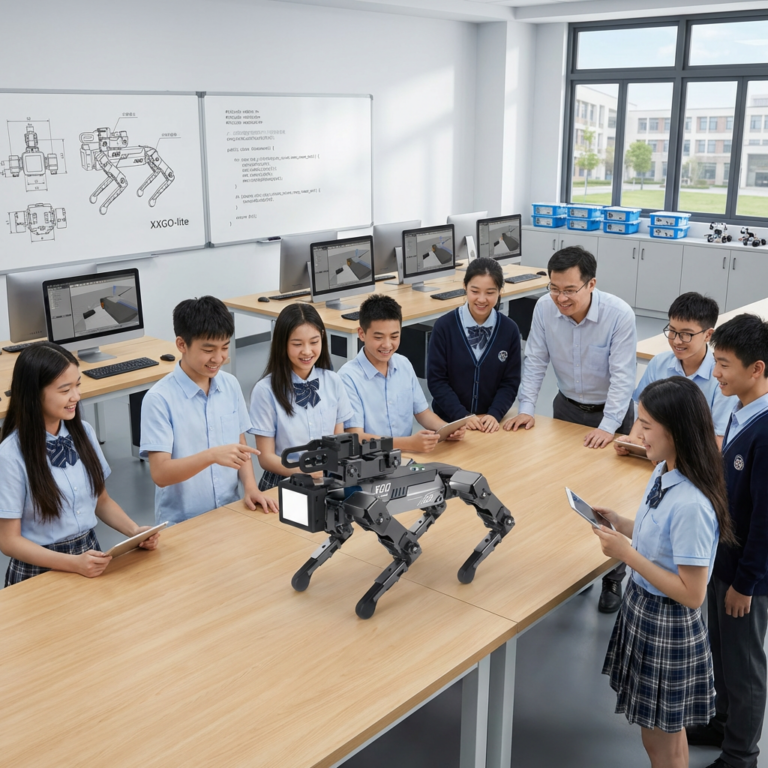 | 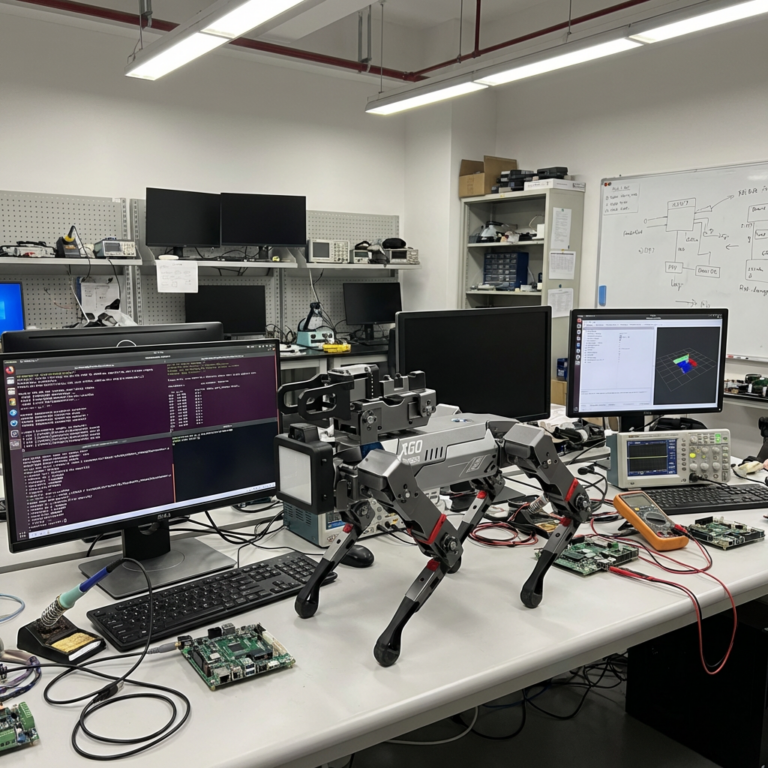 | 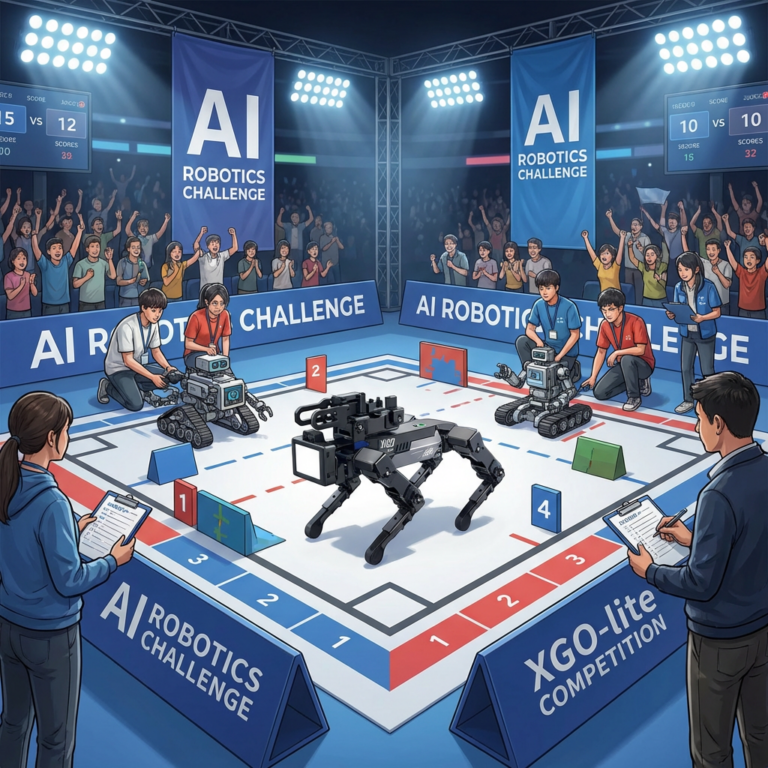 | 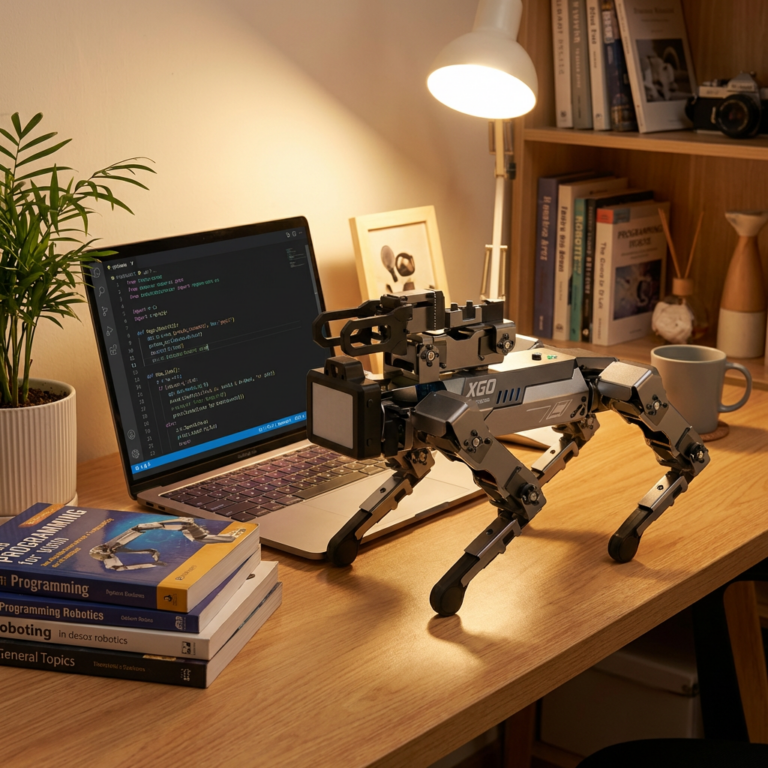 |
| Outdoor Demonstrations | Science Museum Exhibits | Makerspaces | Industrial Warehouse Inspections |
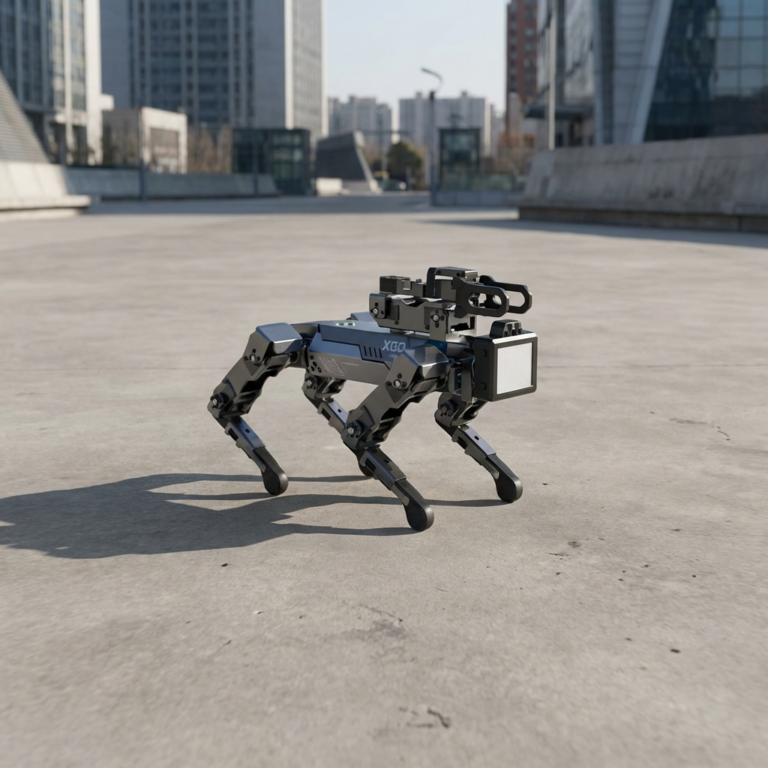 | 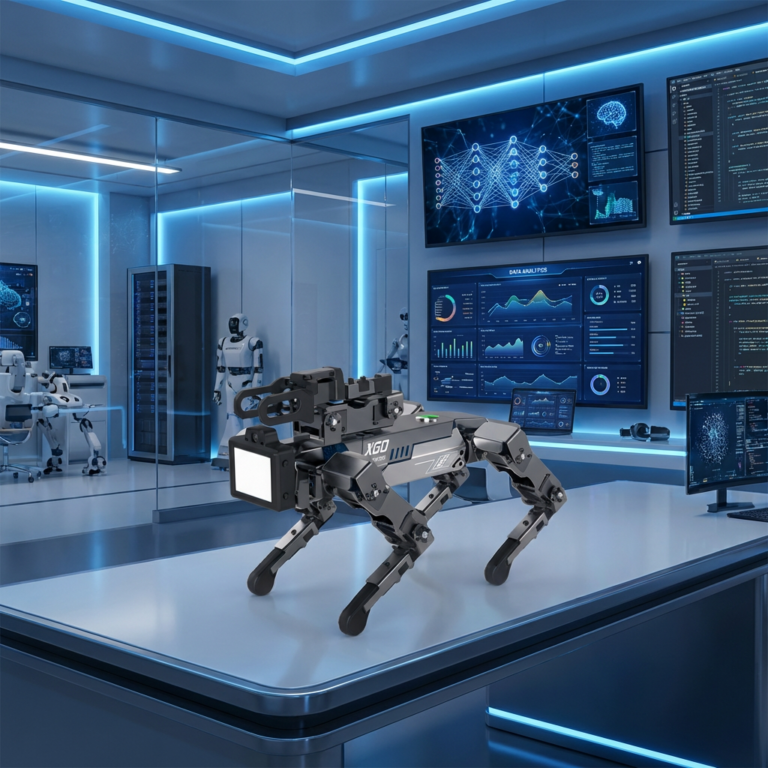 | 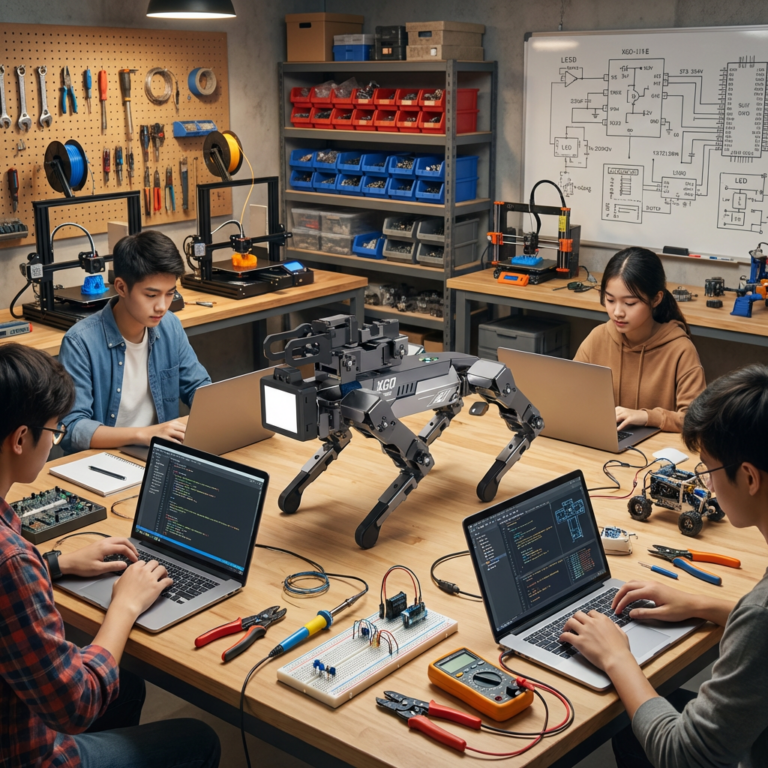 | 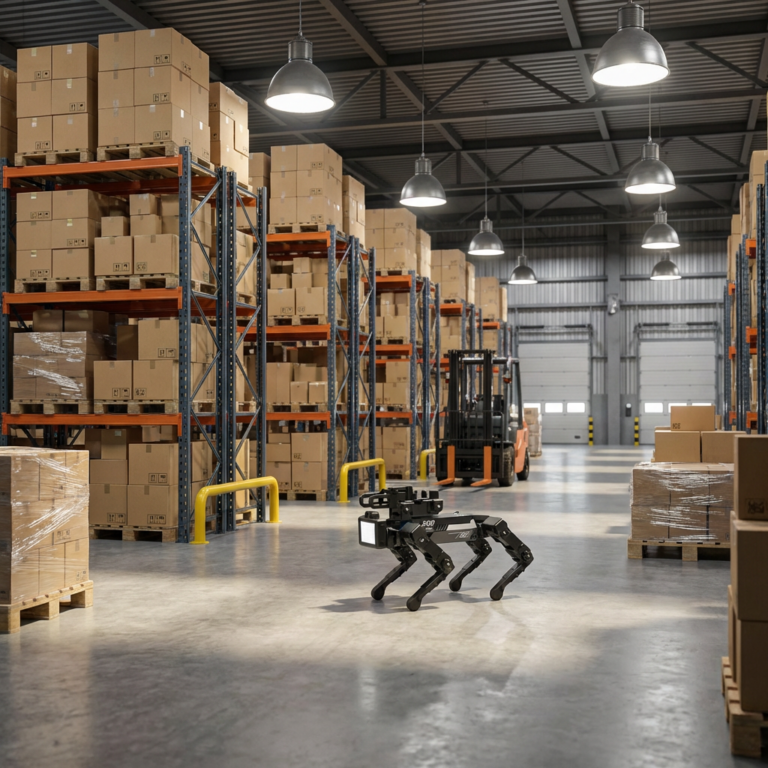 |
FAQ
Q1:What age groups and education levels is Lite3 suitable for?
Lite3 serves users from K12 through university. Blockly visual coding suits beginners aged 10+; Python is ideal for high school and undergraduate students; ROS/Gazebo simulation supports graduate researchers and developers.
Q2:Is Lite3 ready to use out of the box? Does it require assembly?
Yes, Lite3 ships fully assembled. No hardware assembly is required — simply connect via the companion app or PC to start controlling it immediately.
Q3: What programming languages are supported?
The CR Series supports Python, Lua, C++, and ROS (Robot Operating System). Drag-to-teach visual programming via DobotStudio Pro requires no coding. Modbus TCP, TCP/IP, Wi-Fi, and EtherCAT interfaces are standard for PLC/SCADA integration.
Q4:What programming languages and development environments are supported?
Lite3 supports Blockly visual programming, Python, and ROS (Robot Operating System). It is also compatible with Rviz and Gazebo for simulation, with an open serial protocol for deep secondary development.
Q5:How long does the battery last and how do you charge it?
The built-in 2500mAh 2S battery (3C discharge) provides approximately 2 hours of runtime under typical conditions. It charges via a standard Type-C 5V 1A port — any common phone charger works.