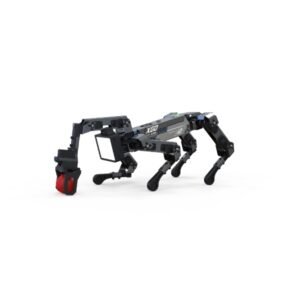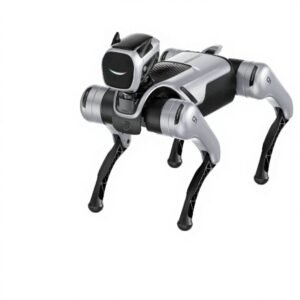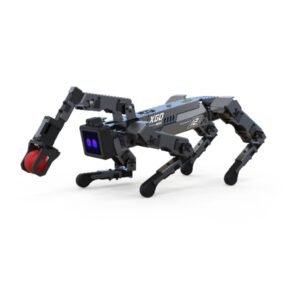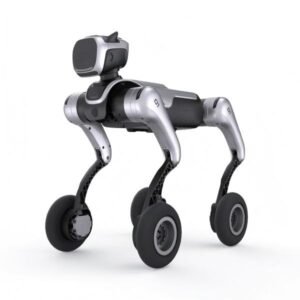
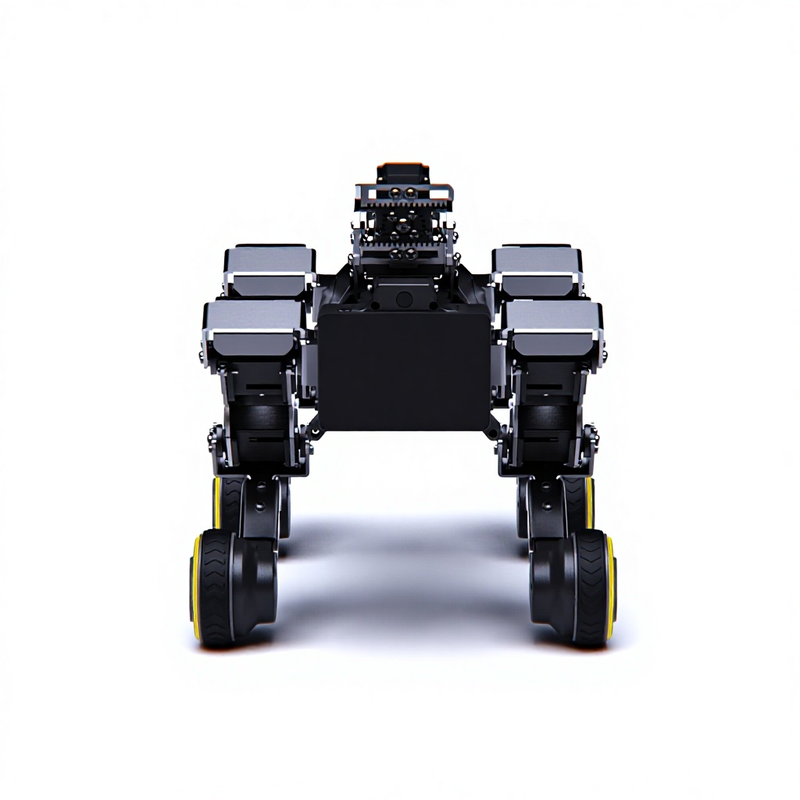
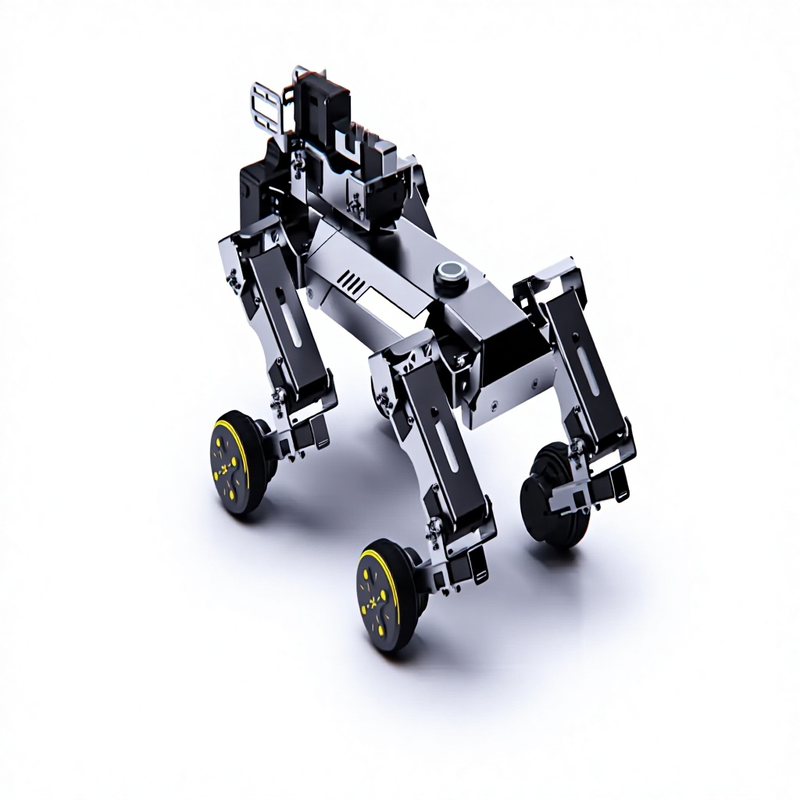
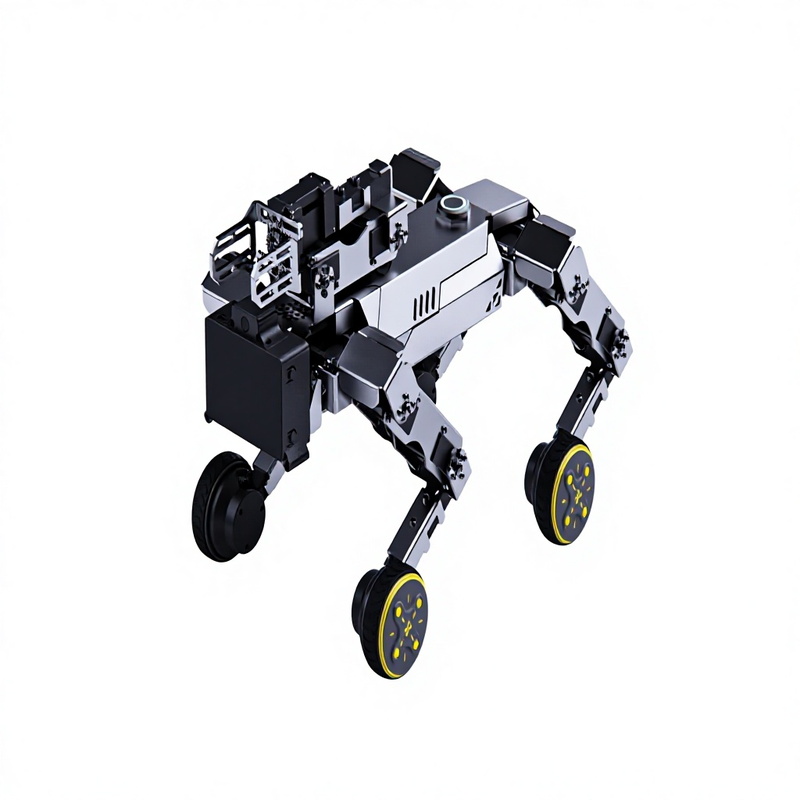
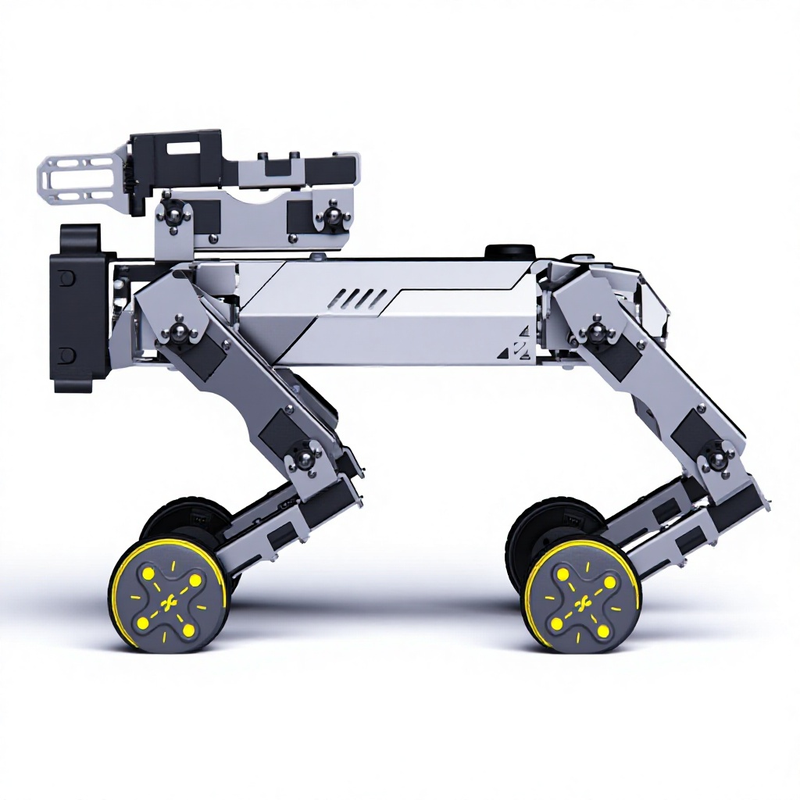
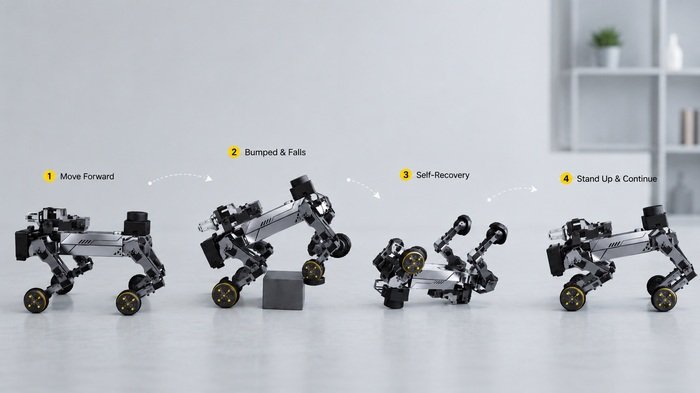
Core Highlights
Dual-Mode Wheeled-Legged Locomotion
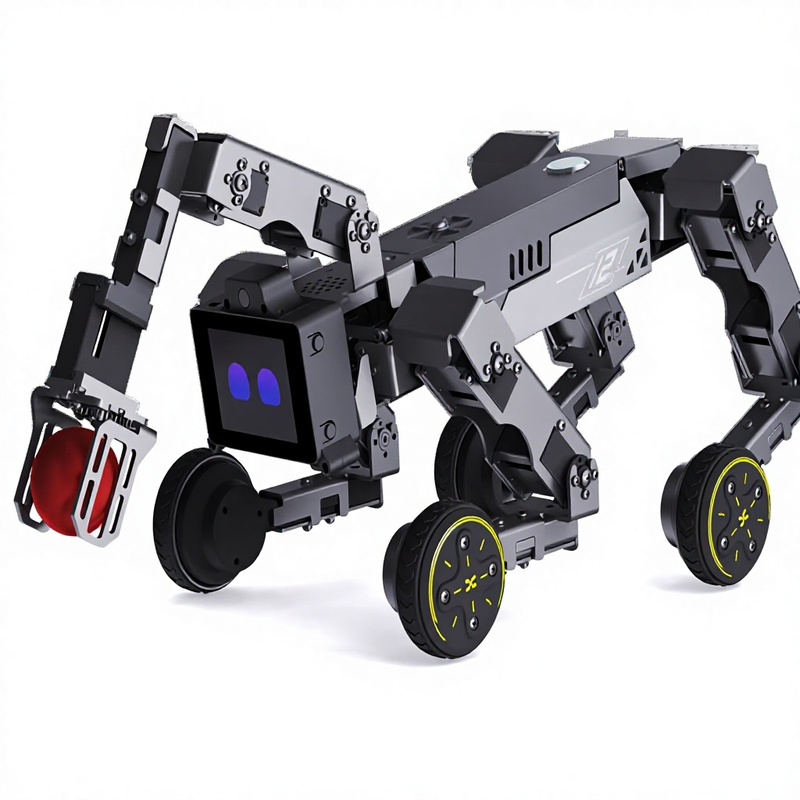
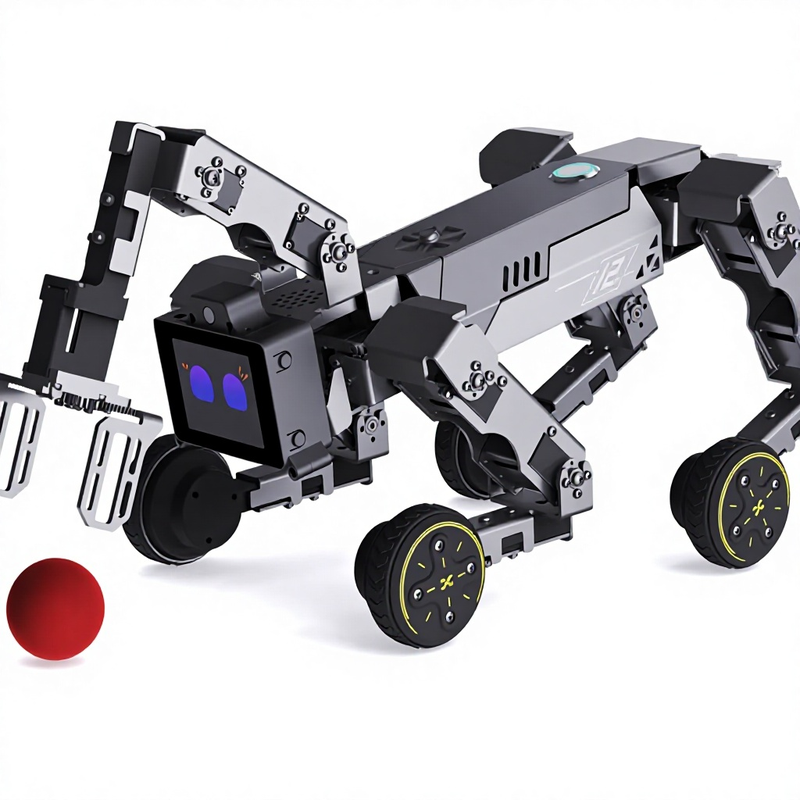
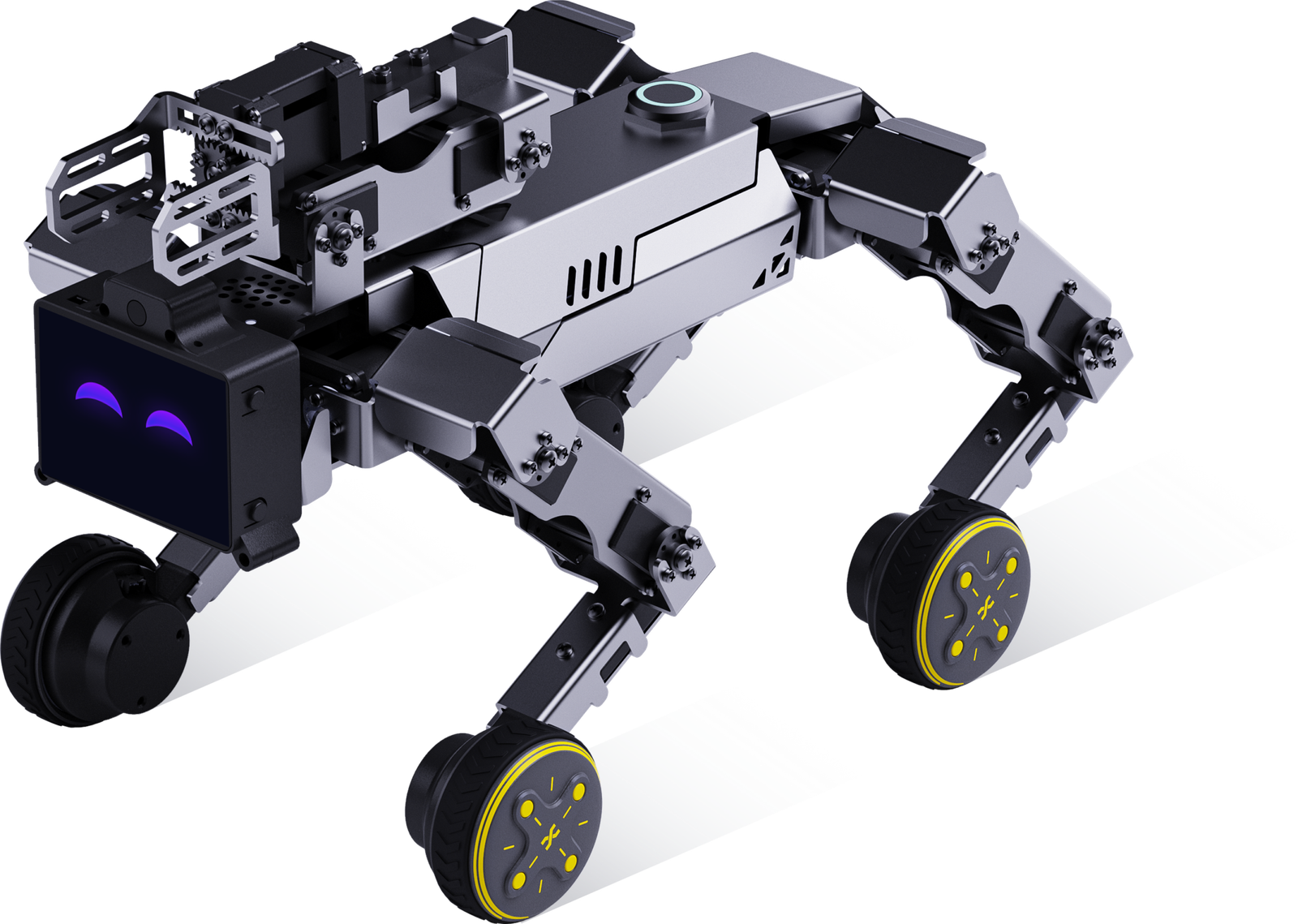
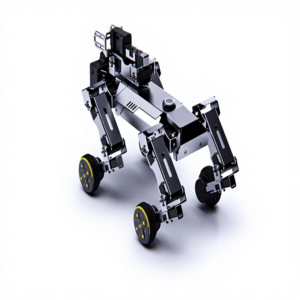
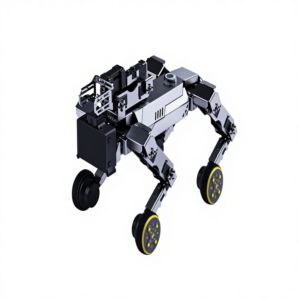
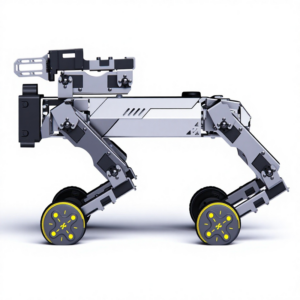
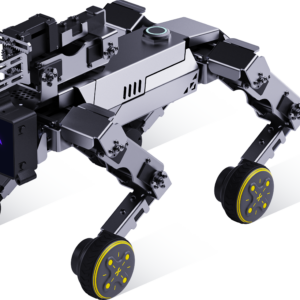
Mini3W uses a hybrid wheeled-legged structure that can switch between wheel rolling and quadruped gait. It can use wheel rolling on flat surfaces and switch to legged motion for posture adjustment and movement on slight slopes, obstacles, or more complex terrain.
FOC Brushless Hub Motor Drive
The four foot ends use FOC brushless hub motors. Combined with leg joint movement, the robot supports wheel propulsion, posture adjustment, and hybrid motion control. The direct-drive structure reduces gear transmission components for flexible start, stop, and motion response.
Three Hybrid Motion Strategies
High-speed wheel rolling (4-wheel flat-ground propulsion), Ice-skating glide mode (leg-assist drifting effect), and Terrain-adaptive gait (12-joint climbing and obstacle traversal) — adapting to diverse real-world scenarios.
Full-Stack AI Interaction Suite
Emotion recognition, gesture control (1-6 trigger actions), human tracking, color tracking, QR code recognition, face recognition, AR face mask, and voice wake-up (Hello lulu) — all pre-integrated and ready out of the box.
Aviation-Grade Aluminum Chassis
1.5mm aviation aluminum frame — significantly higher rigidity than ABS plastic competitors. Total weight 1100g balances structural durability with portability.
Technical Specifications
| Parameter | Specification |
| Model | Mini3W |
| Size | 280×150×180mm |
| Weight | 1100g |
| Material | 1.5mm Aviation Aluminum |
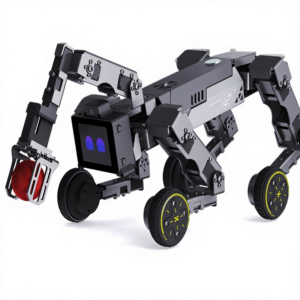
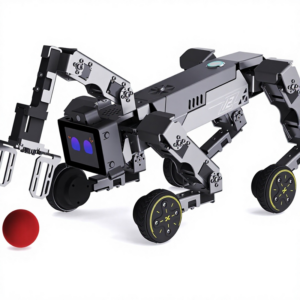
| DOF | 15 (12 legs + 3 robotic arm joints) |
| Screen | 2.0-inch 320×240 full-color IPS |
| Camera | 5MP OV5647 |
| Microphone | Dual MEMS digital microphones |
| Speaker | 8Ω 2W |
| Storage | 32GB Micro SD card |
| CPU | Raspberry Pi CM5 (BCM2711, Quad-core Cortex-A72 1.5GHz, 2GB RAM) |
| MCU | ESP32 |
| Leg Servo | 4.5kg·cm magnetic encoder bus servo |
| Wheel Drive | FOC Brushless Hub Motor |
| Programming | Python / C++ / Blockly / ROS |
| Motion Mode | Rolling + Gait |
| Charging | 8.4V 4A |
| Battery | 18650 2S 3800mAh |
| Runtime | about 1h |
Applicable Industries
| K12 Classroom | University Robotics Lab | Competition | Kids Coding Camp |
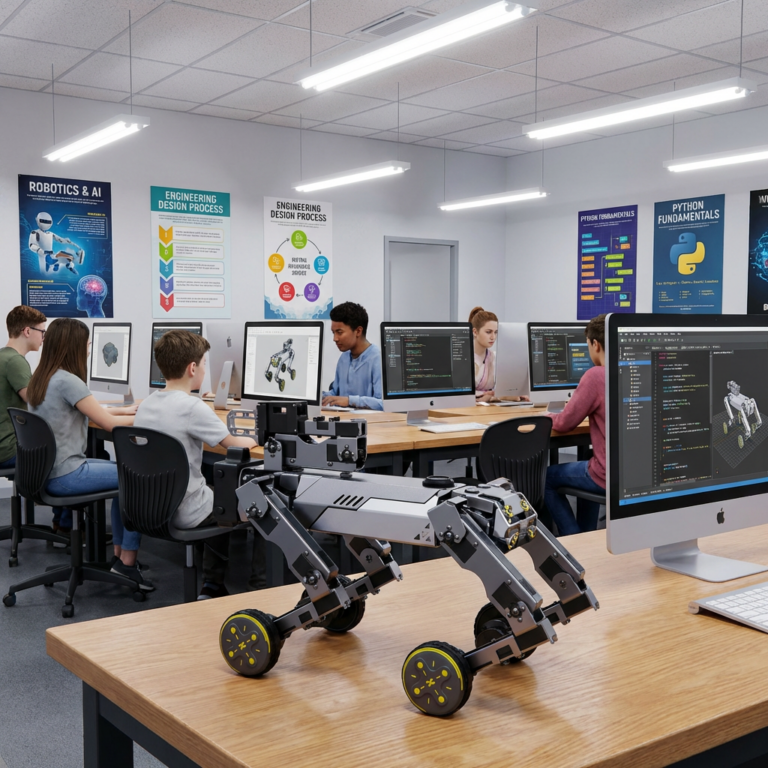 | 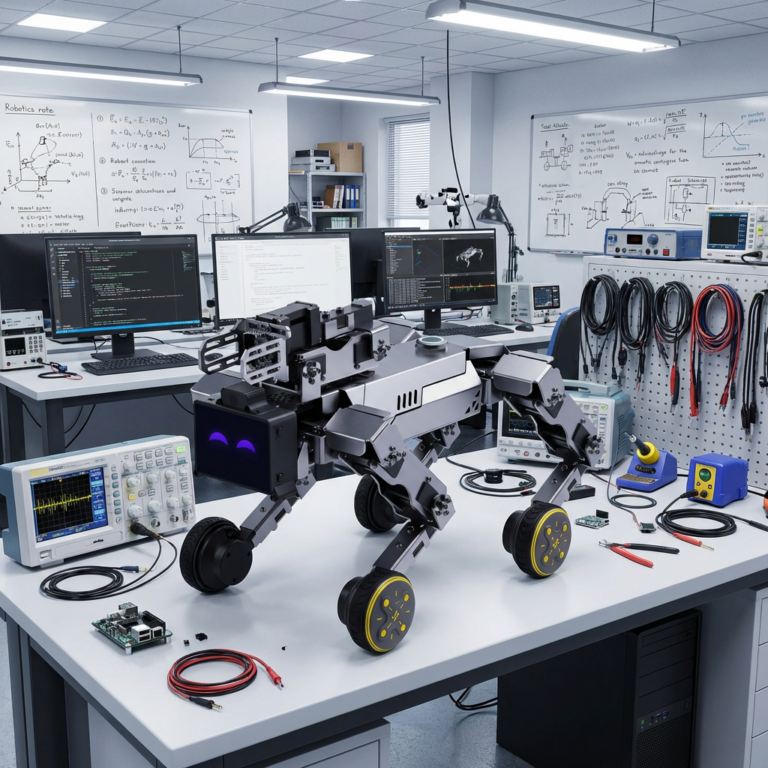 | 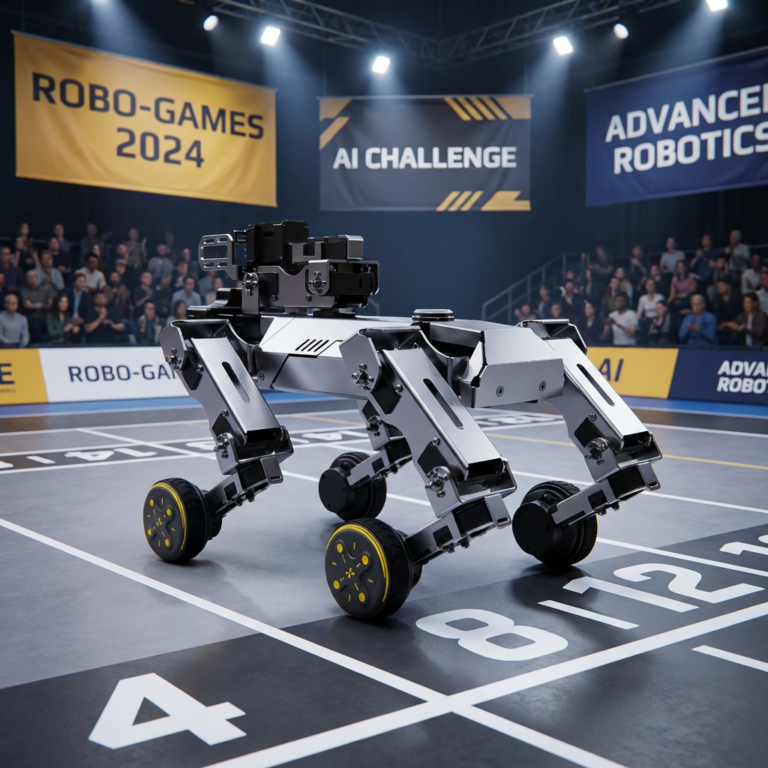 | 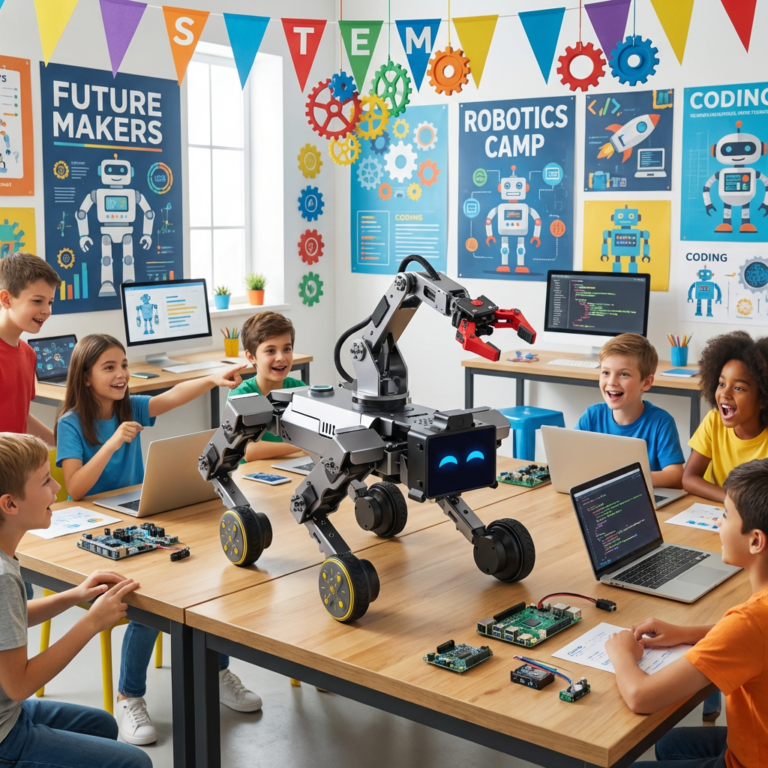 |
| Outdoor Wheel Speed | AI Innovation Center | Terrain-Adaptive Gait | Smart Factory Inspection |
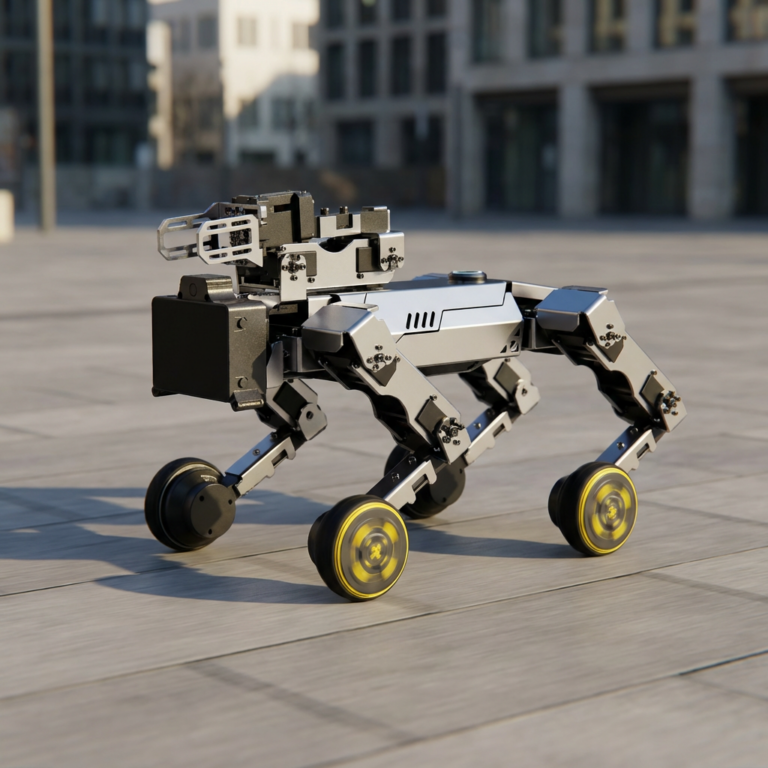 |  | 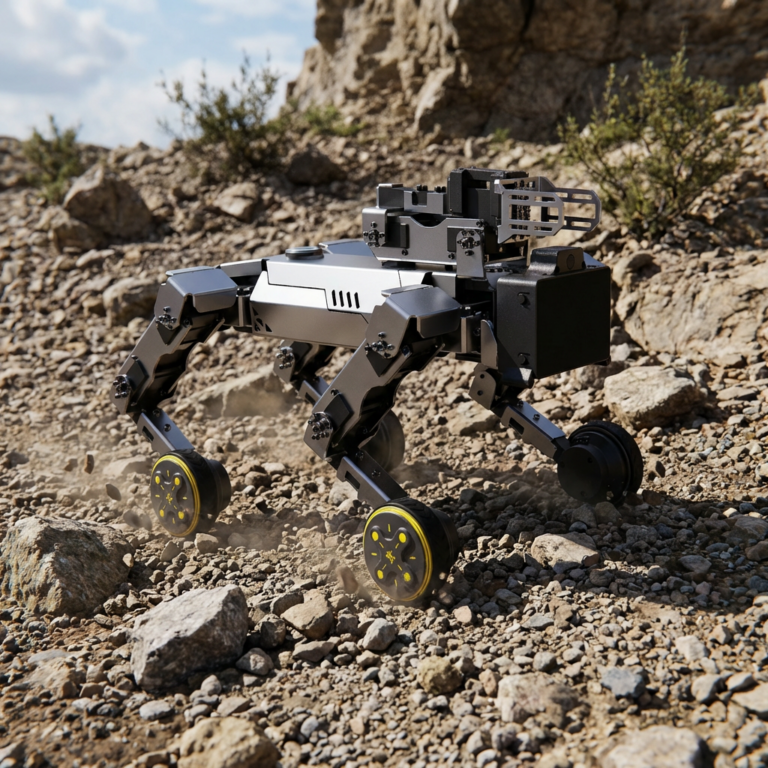 | 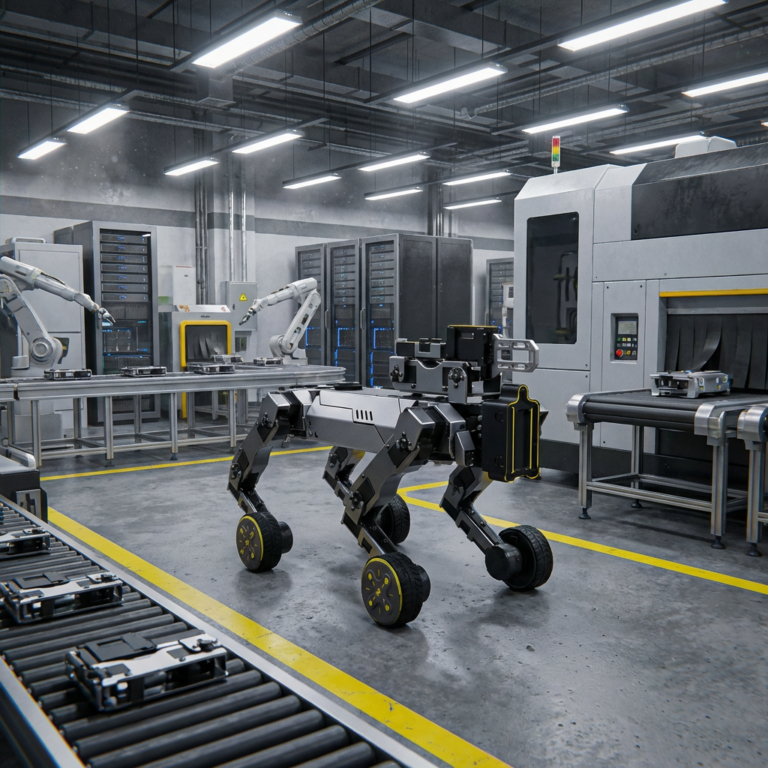 |
FAQ
Q1:What is the core difference between Mini3W and a regular quadruped robot?
The biggest breakthrough is the dual-morphology design — foot tips are replaced with FOC brushless hub motors, enabling instant switching between legged walking gait and high-speed wheel rolling. Regular quadrupeds can only walk; Mini3W rolls at high speed on flat surfaces and switches to legged mode to tackle complex terrain — combining speed with adaptability.
Q2:What advantages does the FOC hub motor have over traditional servos?
FOC brushless hub motors use direct-drive design with no gear train — resulting in zero backlash and near-silent operation. The hollow-cup rotor achieves extremely low rotational inertia, supporting millisecond-level instant start/stop response. Control precision and dynamic performance are far superior to conventional bus servos.
Q3:What AI features does Mini3W support? Does it require internet?
Mini3W features a full local AI suite: emotion recognition, gesture control (numbers 1-6 trigger different actions), human tracking, color tracking, QR code recognition, face recognition, AR face mask effects, and voice wake-up/conversation (Hello lulu). All AI runs locally on Raspberry Pi CM5 — no internet required, fully functional offline.
Q4:How does the robot switch between legged gait and wheel mode?
Mode switching is software-controlled — triggered via the companion app or a Python command, with near-instantaneous transition. The robot also features a unique ice-skating mode: while wheel-rolling, the leg joints perform pushing movements to assist acceleration or posture adjustment, creating a skating-style drift effect exclusive to Mini3W.
Q5:Can Mini3W be used for secondary development? Are open interfaces available?
Full secondary development is supported. The main computer is Raspberry Pi CM5 (Type-C USB, Micro HDMI) with open serial protocol and bilingual documentation. The lower computer is ESP32; both Python and C++ can call motion control APIs directly. ROS support is included for building a complete robot software stack.