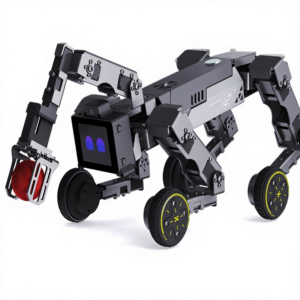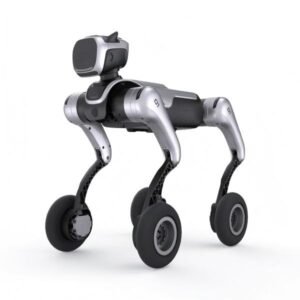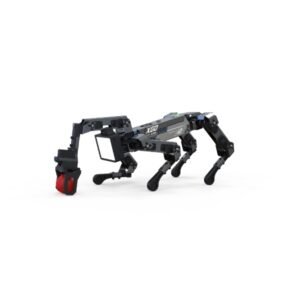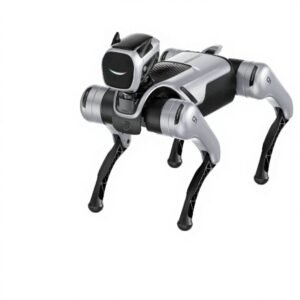

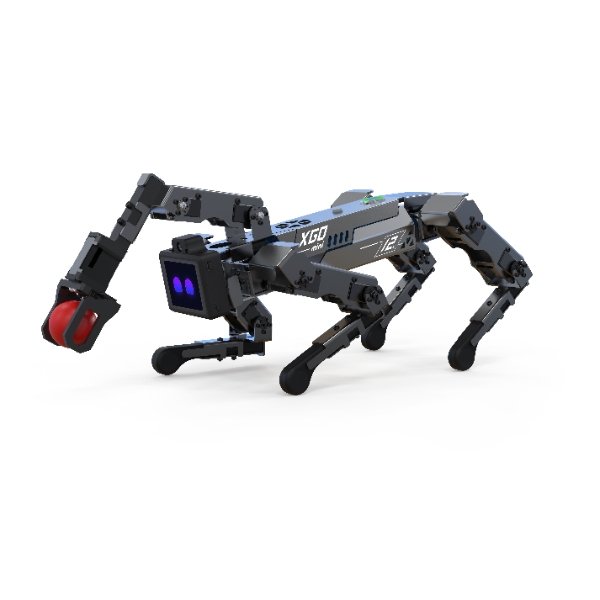
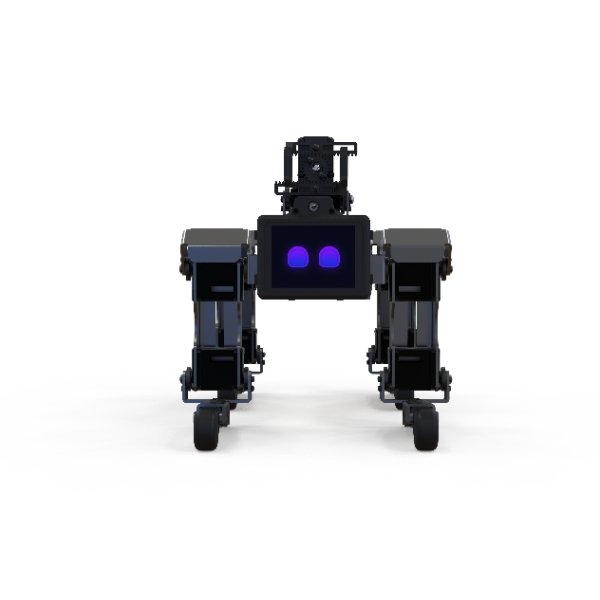
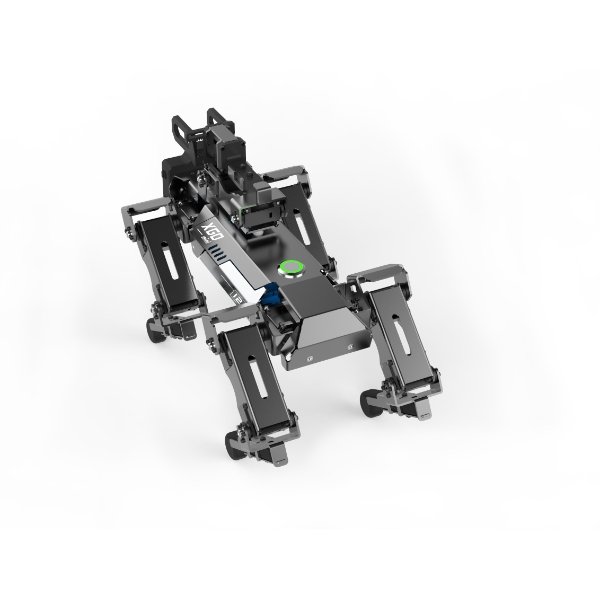
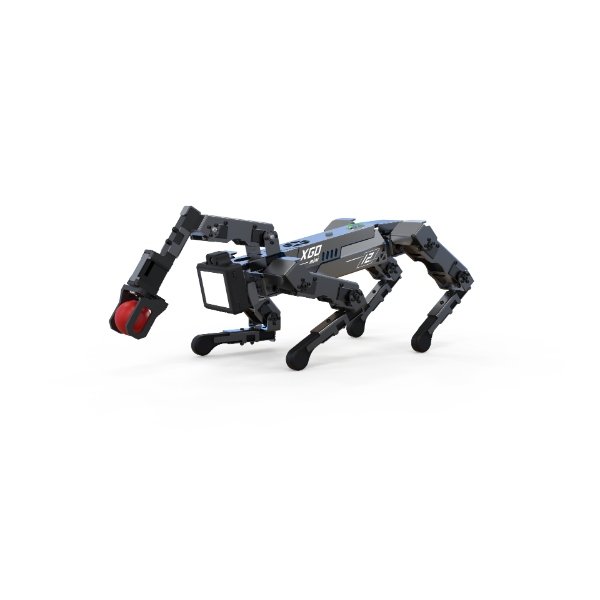
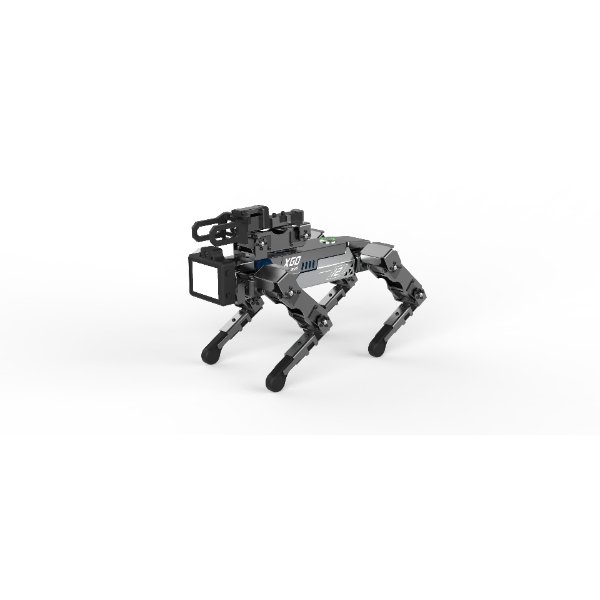
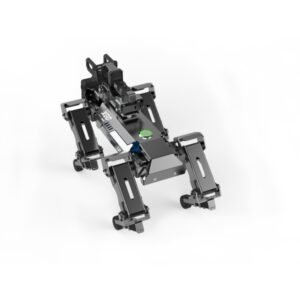
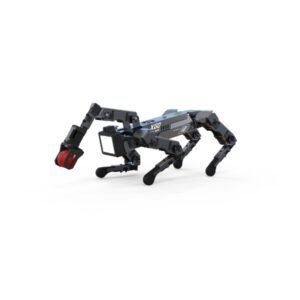
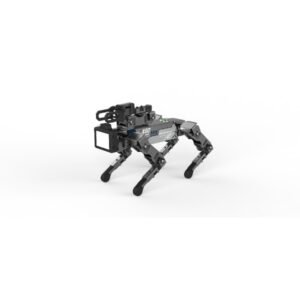
The Mini2s with Radar AI Robot Dog w/ Lidar & Raspberry CM5 (US) is an advanced desktop AI robot designed to serve as a platform for edge computing applications in artificial intelligence. This robot dog boasts a 12-degree-of-freedom (DOF) system complemented by a gripper and Lidar technology, facilitating precise omnidirectional movement and 6D posture control. Its posture stability and diverse motion gaits make it a versatile tool for various robotic tasks.
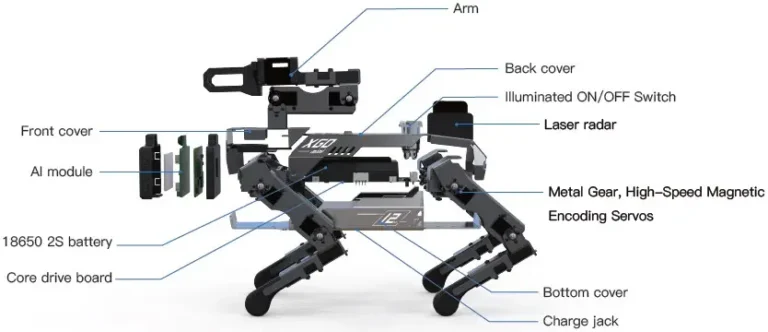
The Mini2s with Radar is equipped with an Inertial Measurement Unit (IMU), joint position sensors, and current sensors, which collectively provide comprehensive feedback on position, joint rotation, and torque. These features enable the robot to perform complex movements with high accuracy.
Additionally, the robot dog supports programming in both Blocky and Python, allowing users to develop sophisticated AI applications through a custom application or a PC interface.
Core Highlights
LiDAR-Enabled AI Robot Platform
Mini2s is equipped with a LiDAR module and combines posture, joint-position, and current-sensing feedback for robot motion awareness, AI development, and demonstration projects.
AI Vision and Voice Recognition
The product supports common AI functions including skeleton recognition, gesture recognition, face detection, voice recognition, and object detection. Its camera, dual MEMS microphones, speaker, and display support interactive applications that combine vision, sound, and motion.
Blockly and Python Programming
Mini2s supports Blockly visual programming and Python programming. It can be controlled and developed through the companion app, PC platform, or wireless Wi-Fi connection.
Motion Recording and Teaching
The product supports motion control, motion recording, and playback functions. Users can learn quadruped robot motion logic and action planning through demonstrations, posture adjustment, and programming control.
Aluminum Alloy Robot Structure
The robot body uses an aluminum alloy structure with surface treatment, while the legs use engineering plastic components. The design is suitable for desktop education, experimental development, interactive demonstrations, and maker projects.
Technical Specifications
| Features | Mini2s (Research Edition) |
| Positioning | High-performance research platform |
| Servo Torque | 4.5 KG.CM |
| Motor Technology | Coreless motor (Magnetic encoder feedback) |
| Movement Range | 0 ~ 360° continuous rotation |
| Control Precision | 0.01° industrial-grade precision |
| Body Material | Full aviation aluminum alloy body |
| Robot Weight | 915g (Heavy-duty) |
| Battery Specification | 3800mAh 2S (3C discharge) |
Applicable Industries
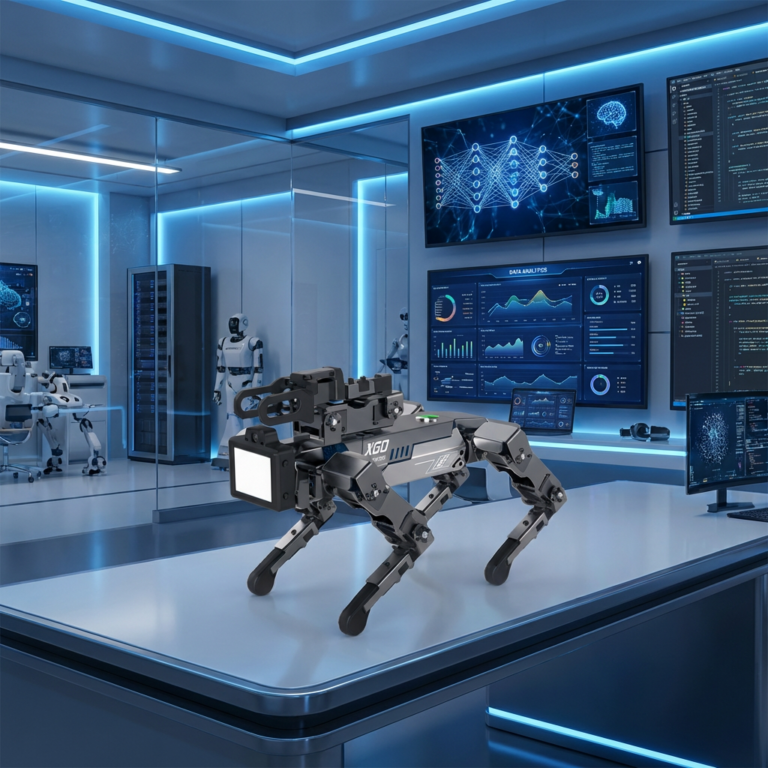
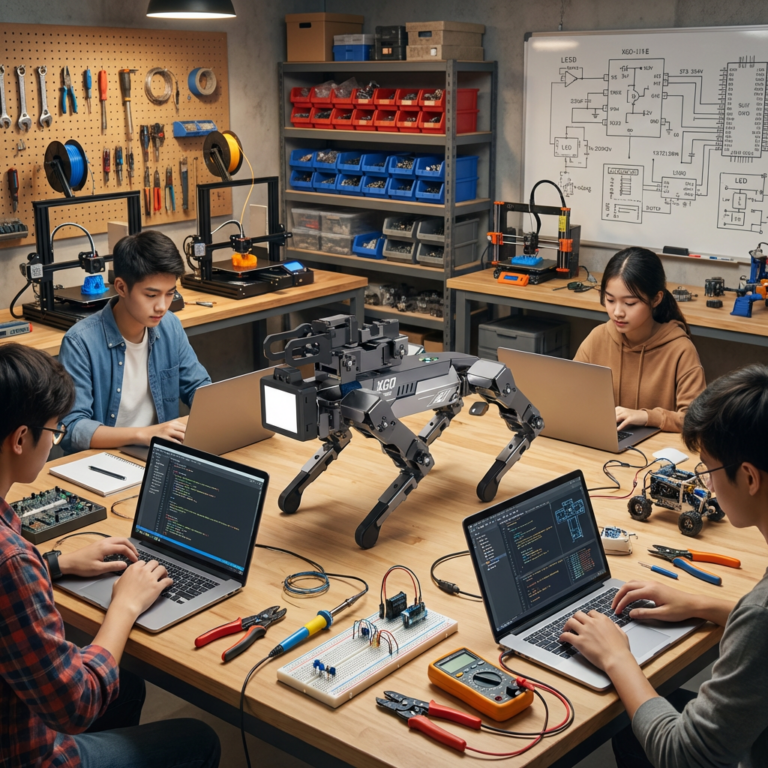
| K-12 Classroom Teaching | University Robotics Labs | Robotics Competitions | Home Learning Desks |
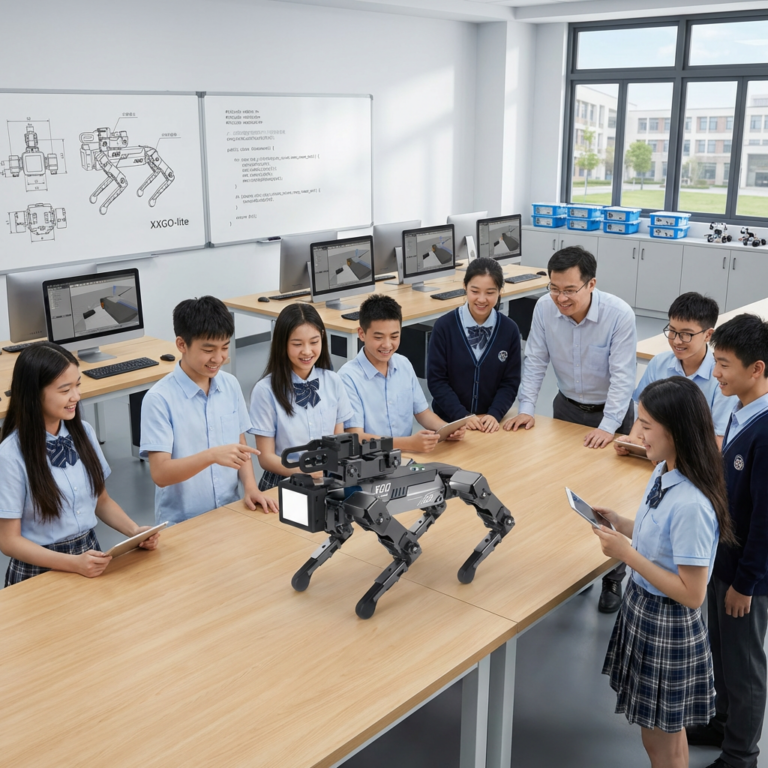 | 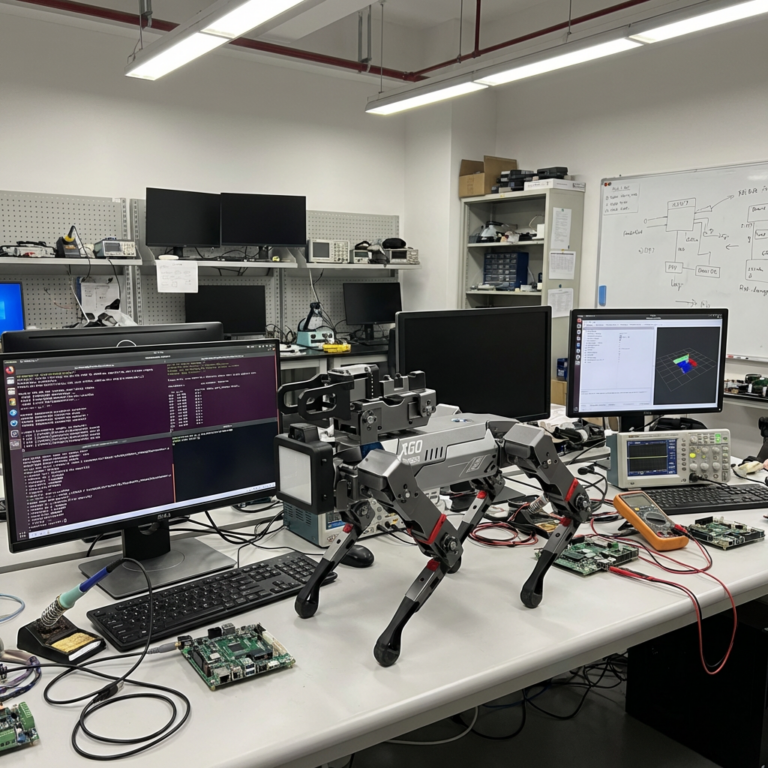 |  | 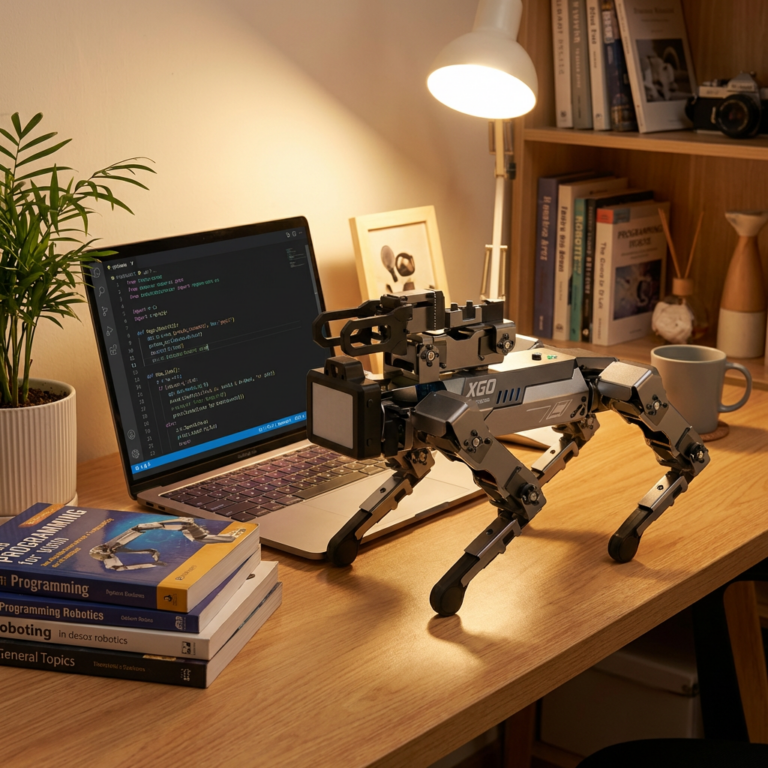 |
| Outdoor Demonstrations | Science Museum Exhibits | Makerspaces | Industrial Warehouse Inspections |
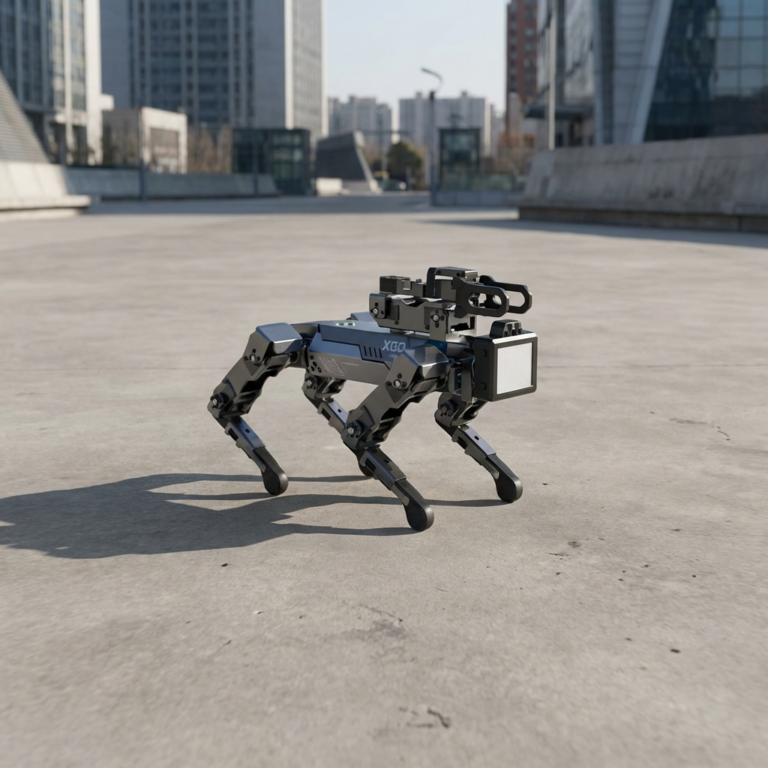 |  |  |  |
FAQ
Q1:How many degrees of freedom does the robot have?
The robot features a 15-DOF structure, including a 12-DOF quadruped locomotion system and a 3-DOF robotic arm with gripper.
Q2:What AI functions are supported?
The supplied materials list AI functions including skeleton recognition, gesture recognition, face detection, voice recognition, and object detection.
Q3: Does Mini2s support LiDAR sensing?
Yes. The supplied product page identifies Mini2s as a desktop AI robot dog equipped with LiDAR sensing.
Q4:What are the charging specifications?
The product is configured with an 8.4V power adapter. The supplied materials list charger input as 100–240V AC, 50/60Hz, with 4A output current.
Q5:Is Mini2s suitable for education and research?
Yes. The product is suitable for K12 programming education, university robotics experiments, AI recognition demonstrations, maker projects, competition training, and quadruped robotics research validation.